When is it safe to go at a busy roundabout?
Go only when you will not make anyone slow down or steer, giving priority to traffic approaching from your right. Compare the gaps between vehicles rather than watching the nearest one alone. If a gap gives you enough time to get moving and clear the entry before the next vehicle arrives, take it.
You know the rule. Can you spot it on the road?
Try it in a free scene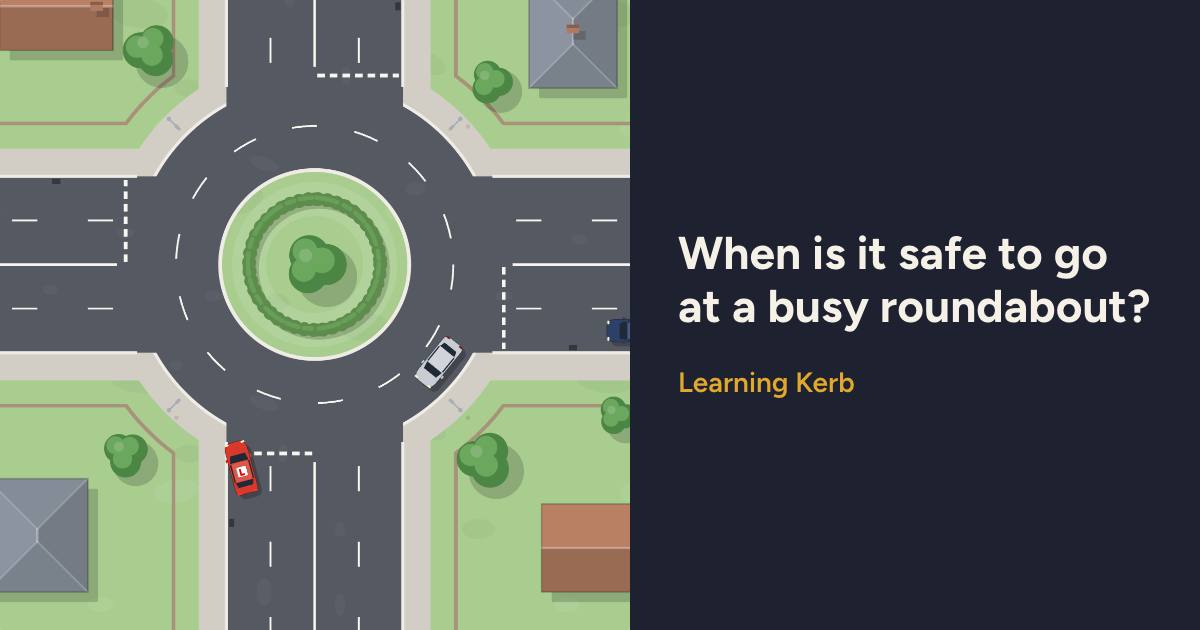
What makes a gap big enough
The test of a gap is what happens to the next vehicle. If it would have to slow down or steer because of you, the gap was too small. DVSA gives this as an example of poor observation at junctions: entering a roundabout and causing a vehicle approaching from the right to slow down.
You need time to get moving and clear the entry before the next vehicle arrives. So compare the gaps between vehicles and look for a longer space, instead of reacting to the nearest car alone.
Do not build your plan on what you think another driver will do. The Highway Code warns that road users already on a roundabout may not be signalling correctly or at all, so a car you expect to leave may keep coming round to you.
Getting your timing right on the approach
Most of the work happens before you reach the line:
- Read the signs, lights and road markings. Some markings let you enter without giving way, but you should still look to the right before joining.
- Decide your exit early and get into the correct lane.
- Adjust your speed and position to fit in with the traffic.
- Look right and start comparing the gaps, and take extra care not to cut across cyclists in the left-hand lane.
- Look forward before you move off, to make sure traffic in front has moved off.
When you keep missing gaps
People force it when a busy roundabout will not clear. If you are unsure, wait for the next gap: holding on a little longer is far better than making someone brake hard for you. But do go when a good gap comes. Not emerging when it is safe is a common fault too, and the queue behind you pays for it.
How we mark each mistake
Practice marks only: on a real test, the examiner decides. How faults work.
You pulled out in front of traffic Dangerous fault
A vehicle already on the roundabout had to brake hard for you. Give priority to traffic approaching from your right, and only join when you will not make anyone slow down or steer.
You missed safe gaps Driving fault
There were gaps long enough to join safely. Waiting when it is safe to go holds up the traffic behind.
What the Highway Code says
Where this fits on the test
Top 10 fail reason: not making effective observations at junctions. DVSA driving skills: Roundabouts.