Can you pull out when a car from the right is indicating left?
Not on the indicator alone. An indicator may not have been cancelled, so wait until the car is clearly turning into your road, or has gone past, then check the road is clear. The Highway Code says you should not assume a vehicle from the right that is signalling left will turn, and you MUST give way to traffic on the main road at broken white lines.
You know the rule. Can you spot it on the road?
Try it in a free scene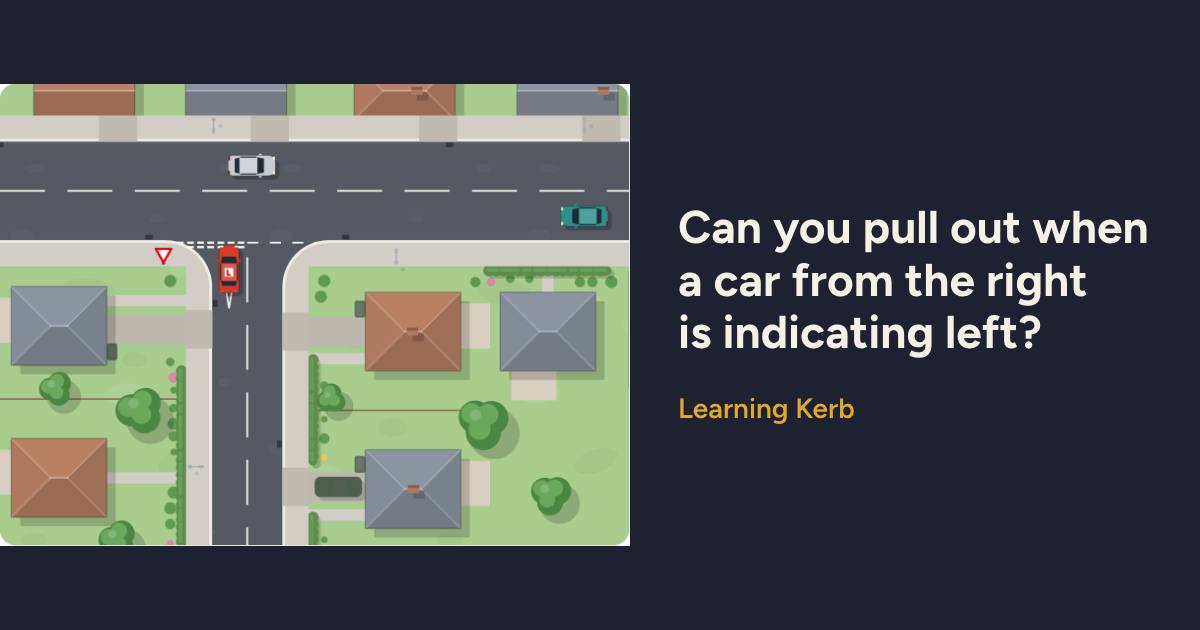
What an indicator can and cannot tell you
An indicator tells you what a driver may be planning. It does not tell you what the car will do. If you pull out because of it and the driver carries straight on, you are in their path.
People get caught out by reading it as an invitation to go. The Highway Code’s advice is that you should proceed only when you are satisfied that it is safe, and a flashing indicator on its own does not show that.
What to watch instead
Ask yourself one question: is the car actually turning into my road yet? Watch what the car does: is it slowing and steering in? Slowing alone is not enough, as the driver may be heading for a turning beyond yours. If the answer is not a clear yes, treat it as going straight on and keep waiting.
Flashing your headlights to ask the driver what they are doing is not the answer. Wait, and let the car show you.
- If the car starts to turn into your road, it has shown you what it is doing, but something behind it may still be coming.
- If it carries straight on, let it pass, then check again.
- Either way, look all around before you go. The car that caught your eye may not be the only thing moving.
Turning left does not mean only looking right
Traffic from your right is the traffic you are joining, so it gets most of your attention. You still need to look left. DVSA gives the example of learners who turn left into a busier road without looking that way, and so miss parked vehicles, obstructions and other hazards.
Once the car has gone and the road is clear, go. Staying put after that only keeps anyone behind you waiting.
How we mark each mistake
Practice marks only: on a real test, the examiner decides. How faults work.
You pulled out in front of the car Dangerous fault
The car was indicating left, but it carried straight on, and you pulled out into its path. You MUST give way to traffic on the main road, and an indicator may not have been cancelled, so wait until you are sure what the other driver is doing.
You made the car brake Serious fault
The car was indicating left, but it carried straight on and had to brake for you. You MUST give way to traffic on the main road, and an indicator may not have been cancelled, so wait until you are sure what the other driver is doing.
You waited too long Driving fault
The car had gone past and the road was clear for several seconds. Waiting at the junction when it is safe to go holds up anyone behind you.
What the Highway Code says
- Rule 104:
be aware that an indicator on another vehicle may not have been cancelled.
- Rule 170:
not assume, when waiting at a junction, that a vehicle coming from the right and signalling left will actually turn. Wait and make sure
- Rule 172:
You MUST give way to traffic on the main road when emerging from a junction with broken white lines across the road.
MUST and MUST NOT are the law. Should is advice, which can still be used in evidence in court.
Where this fits on the test
Top 10 fail reason: not making effective observations at junctions. DVSA driving skills: Junctions.