When do you signal if you are pulling up just after a side road?
Wait until you are passing the side road, then signal left. If you signal before it, a driver waiting to pull out may think you are turning in and pull out in front of you. Check your interior and left mirrors first. Your brake lights will warn traffic behind you that you are slowing down.
You know the rule. Can you spot it on the road?
Try it in a free scene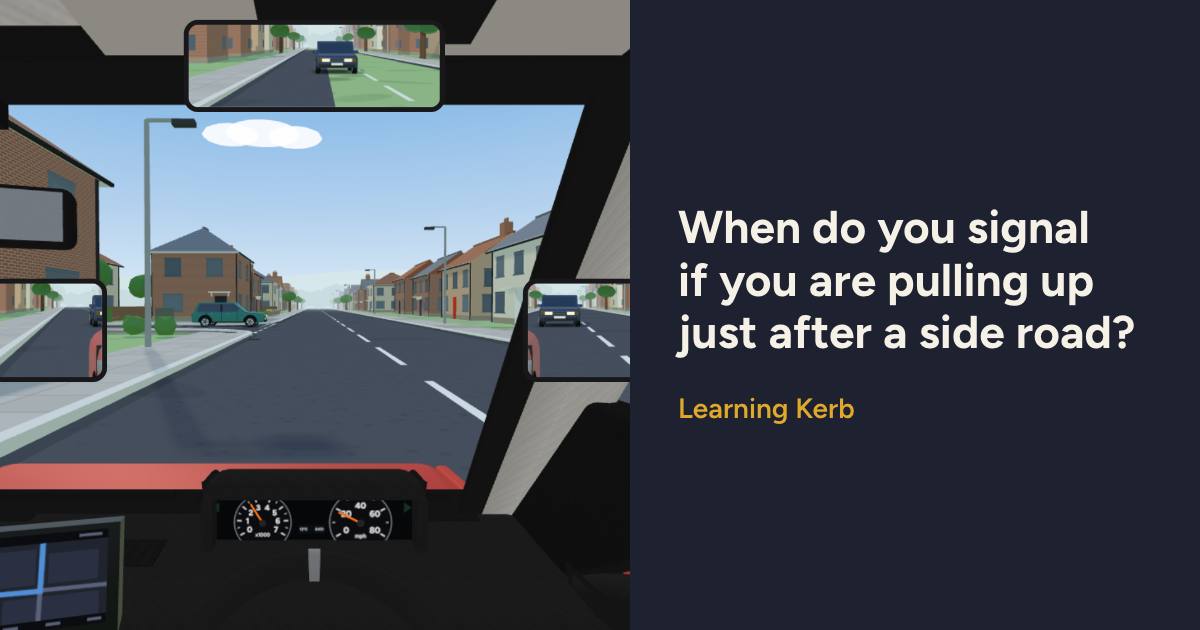
Two drivers are reading your signal
Signalling in good time is a good habit, but the driver behind you is not the only one watching. A left signal before a side road tells a driver waiting at the end of it that you are turning in, and they may decide it is safe to pull out.
Rule 103 asks for both things at once: give clear signals in plenty of time, having checked the signal is not misleading. Here, the earliest moment it cannot mislead is as you pass the road.
How the approach goes
Take it in this order:
- Check your interior mirror for who is following, and your left mirror for anyone on your nearside, such as a cyclist.
- Slow down as you approach. Your brake lights do the warning for now.
- Signal left as you pass the side road.
- Move in, pull up, and cancel the signal.
Why you should not just leave the signal out
If a car is following you, it needs to know you are stopping. Rule 103 says to use signals before stopping, and GOV.UK lists pulling up at the side of the road without signalling to following traffic when appropriate among its common faults.
Timing is what matters. Signals are assessed on being necessary, correct and timed, neither too late nor too early, and signalling left or right without turning is a common fault.
Leave some room past the junction as well. The Highway Code says not to stop opposite or within 10 metres of one, except in an authorised parking space.
How we mark each mistake
Practice marks only: on a real test, the examiner decides. How faults work.
Your signal was misleading Dangerous fault
Signalling before the side road made it look as if you were turning into it, so the waiting driver pulled out in front of you. If you want to stop after a side road, do not signal until you are passing it.
You did not check behind Driving fault
A car was following you. Use your mirrors in good time before you signal or change speed, so you know what is behind you.
You did not check your left mirror Driving fault
You are moving in towards the kerb, so check your left mirror for anyone on your nearside, such as a cyclist, before you move over.
You did not signal Driving fault
A car was following you. Signals tell other road users you are stopping, so signal as you pass the side road, once your signal cannot be mistaken for a turn.
What the Highway Code says
- Rule 103:
If, for instance, you want to stop after a side road, do not signal until you are passing the road. If you signal earlier it may give the impression that you intend to turn into the road.
- Rule 161:
use them in good time before you signal or change direction or speed
MUST and MUST NOT are the law. Should is advice, which can still be used in evidence in court.
Where this fits on the test
Top 10 fail reason: not using mirrors correctly when changing direction. DVSA driving skills: Signals, Mirrors.