How do you move off safely on your driving test?
Use all your mirrors, look round over your right shoulder to check the blind spot, signal if it is necessary, then take a final look and move off only when it is safe. Mirrors alone are not enough, because they cannot show the area beside your rear door.
You know the rule. Can you spot it on the road?
Try it in a free scene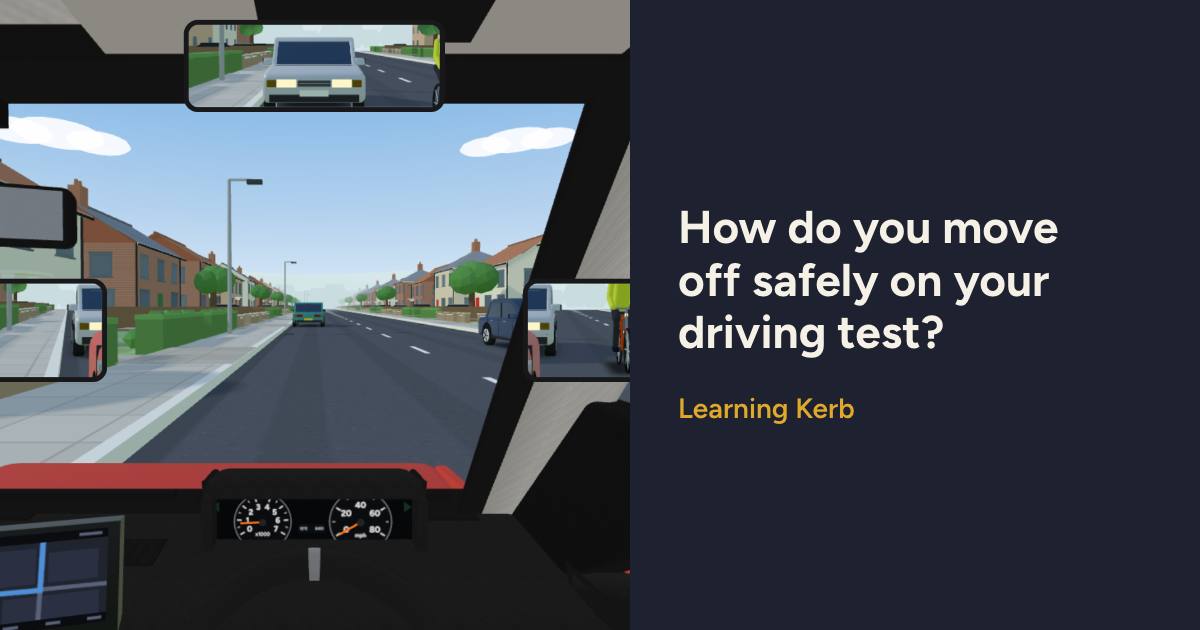
Why clear mirrors can still fool you
The usual slip is a quick glance at the mirrors, an empty road, and off you go. But a cyclist can be right beside your rear door, where no mirror shows them. The Highway Code calls these areas blind spots, and the only way to see into them is to turn your head.
Not moving off safely is third in DVSA’s list of the top 10 reasons people fail. One of its examples is moving off from the side of the road time after time with no blind spot checks where they were needed.
The checks, in the order Rule 159 gives them
Each check covers something the one before it cannot:
- All your mirrors, to check the road is clear.
- A look round over your right shoulder, because that is the way you are moving.
- A signal, if it is necessary. Signals are there to warn and inform other road users.
- A final look round, just before the car moves.
What to do when someone is coming
Wait until they are clear ahead of you. A signal does not give you priority, so it will not make a gap for you.
Then get going. As soon as the road is clear, take a final look round and move off. Examiners also look at undue hesitation, so waiting long after the road is clear is a mistake too.
Keep the car under control as you go, so it does not roll back or stall. If you drive a manual, work on the biting point with your instructor or supervising driver.
How we mark each mistake
Practice marks only: on a real test, the examiner decides. How faults work.
You moved off into a cyclist Dangerous fault
A cyclist was beside your rear door, where no mirror can see. Look round over your right shoulder to check the blind spot before you move off.
You moved off into the cyclist Dangerous fault
The cyclist was still passing when you pulled out. Having seen them, wait until they are clear ahead of you. Move off only when it is safe to do so.
You did not use your mirrors Serious fault
Before moving off you should use all your mirrors to check the road is clear, then look round to check the blind spots.
You waited too long Driving fault
The road behind had been clear for several seconds. Take a final look round and go when it is safe.
What the Highway Code says
- Rule 159:
look round to check the blind spots (the areas you are unable to see in the mirrors)
MUST and MUST NOT are the law. Should is advice, which can still be used in evidence in court.
Where this fits on the test
Top 10 fail reason: not moving off safely. DVSA driving skills: Moving away and stopping.