What are the common faults on the pull up on the right test?
The common faults are misjudging oncoming traffic, relying on just the mirrors, and finishing on or too far from the pavement. Check your mirrors, signal right, wait for a safe gap, then cross and stop close to the right-hand kerb. Reverse in a straight line for around two car lengths, looking all round. Then rejoin the traffic only when the road is clear in both directions.
You know the rule. Can you spot it on the road?
Try it in a free scene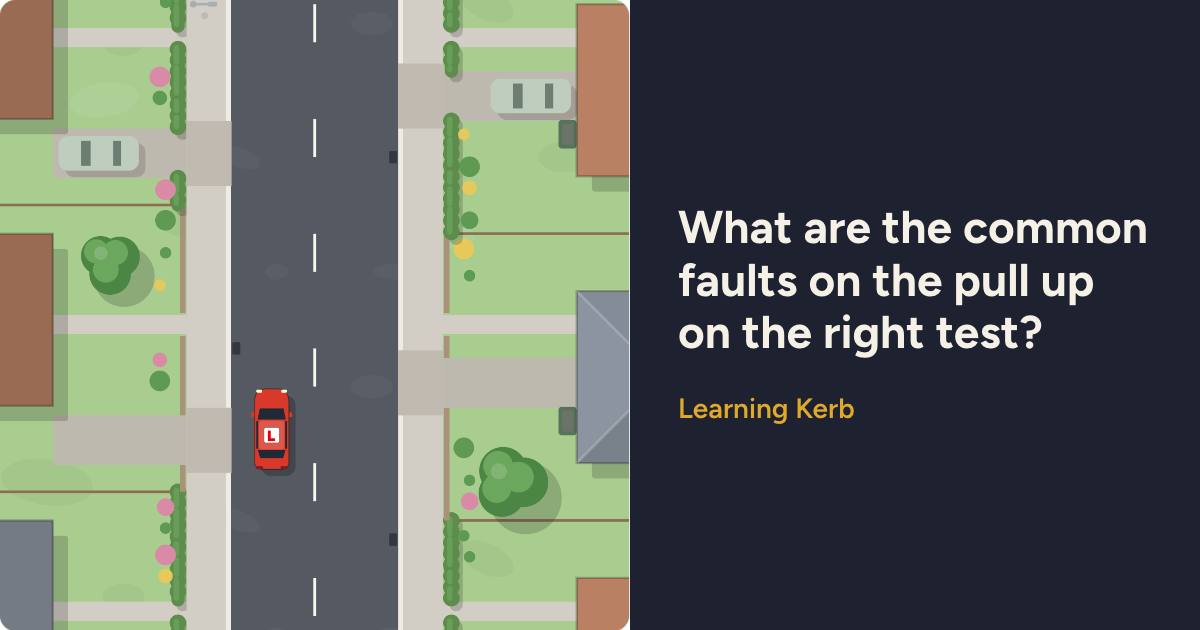
What you are asked to do
This is one of three reversing exercises, and the examiner will ask you to do one of them. GOV.UK describes it as pulling up on the right-hand side of the road, reversing for around 2 car lengths and rejoining the traffic. You are marked on control and observation, and you should stay reasonably close to the pavement without touching it.
There is a legal limit in the middle of all this: under Rule 203 you MUST NOT reverse further than necessary. This is a test exercise. In everyday driving, the Highway Code says do not park facing against the traffic flow.
The common faults, stage by stage
Each stage has its own hazard and its own common faults:
- Crossing over. You cross the path of oncoming traffic, so the gap comes before the move. Not judging that traffic safely is a common fault.
- Reversing. Look all round before you start and as you go, mainly through the rear window. Relying on just the mirrors is a common fault, and so is not being aware of a hazard or another road user.
- Finishing. Touching or driving onto the pavement and being too far from it are both on the list.
Rejoining is harder than a normal move off
You are facing oncoming traffic and have to cross it, with a poorer view behind than you get from the left. Traffic coming towards you does not have to give way to a car leaving the right-hand kerb. The third of DVSA’s top 10 fail reasons has an example of exactly this: moving off after the exercise with an oncoming vehicle, or one close behind, so that it has to slow down severely or stop.
So go through Rule 159 in full: all your mirrors, a look round at the blind spots, a signal if it is necessary and a final look. Wait for anything coming either way to pass. As soon as the road is clear both ways, take that final look and go.
How we mark each mistake
Practice marks only: on a real test, the examiner decides. How faults work.
You pulled out into traffic Dangerous fault
A car was coming towards you as you pulled out across its path. Moving off from the right means crossing oncoming traffic, so wait until it has passed.
The routine was out of order Driving fault
Use mirrors, signal, manoeuvre: check your mirrors, signal right, wait for a safe gap, and only then cross to the right-hand kerb.
You waited too long Driving fault
The road had been clear in both directions for several seconds. Take a final look round and go when it is safe.
What the Highway Code says
Where this fits on the test
Top 10 fail reason: not moving off safely. DVSA driving skills: Reversing, Moving away and stopping.