What do examiners mark on the parallel parking test?
Examiners mark your control of the car and your observation all round. Stop beside the parked car, look all round, then reverse slowly into the space behind it, pausing for anyone who comes near. Finish close to the kerb without touching it, parallel to it, and within 2 car lengths of the vehicle in front. It is one of three reversing exercises, and you will be asked to do one.
You know the rule. Can you spot it on the road?
Try it in a free scene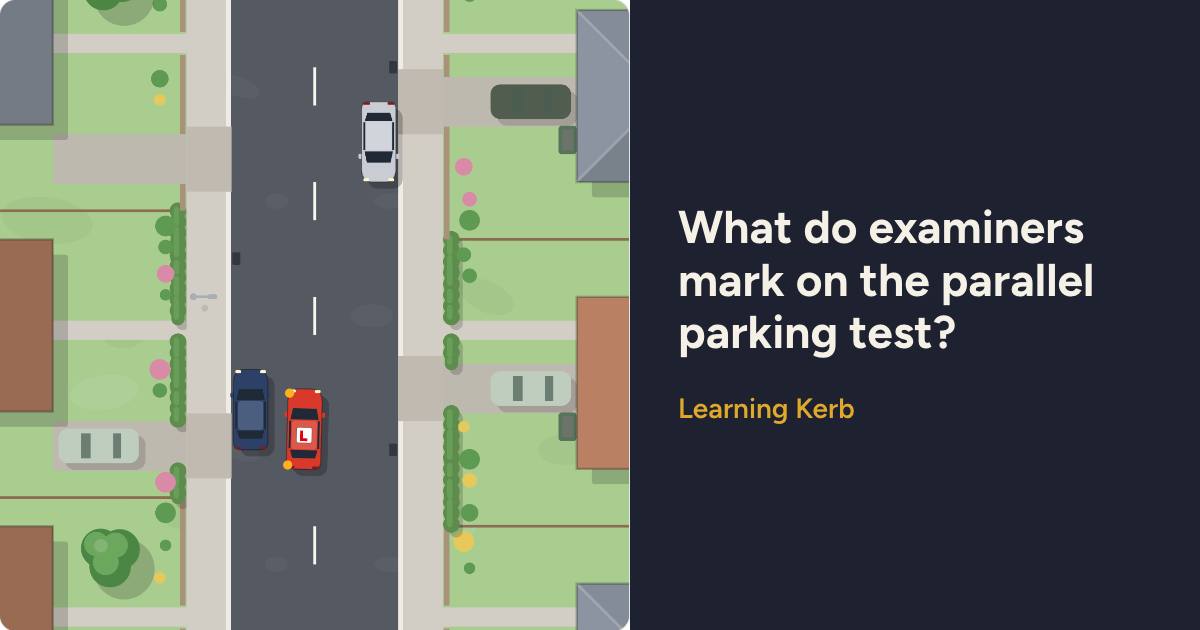
What the examiner is looking at
GOV.UK says you are marked on two things: control of the car while reversing, and observation of your surroundings. The neat finish is only part of it, because observation is marked as well as control.
The common faults are having to reposition the car a lot because of poor control, touching or driving over the pavement, and not taking effective observations all round. How any one of these is marked depends on what happens on the day.
How to do it, from start to finish
Rule 202 sets out the looking, so build it into each stage:
- Before you move, use all your mirrors and check the blind spot behind you.
- Check for pedestrians, cyclists, other road users and obstructions behind you.
- Reverse slowly, looking mainly through the rear window and checking all around.
- If anyone approaches, pause and let them pass, then look again and carry on. If they have clearly stopped to let you finish, look all round and carry on.
- Finish reasonably close to the kerb and parallel to it, without touching it.
The part learners forget: the front of the car
You are looking backwards, but as you turn in, the front of your car swings out into the road. A driver coming up behind may not expect that. Other road users have priority over your manoeuvre, so carrying on and expecting them to wait is the wrong call, even if you have nearly finished.
Steering timing matters for the same reason. Steering too early or too late can make the car hit the kerb or swing out towards another road user, and steering control is sixth in DVSA’s top 10 reasons for failing. To improve, practise with your instructor or supervising driver, reversing into different size spaces and making adjustments once you are in the space.
How we mark each mistake
Practice marks only: on a real test, the examiner decides. How faults work.
You made an approaching car stop Serious fault
The front of your car swung out as the other car arrived, and it had to brake. Look all round as you reverse, and pause for other road users.
You hit the kerb Serious fault
Finishing hard against the kerb means your wheels have touched or climbed it. Aim to finish close to the kerb without touching it.
Too far from the kerb Driving fault
A metre out leaves your car sticking into the road. Finish reasonably close to the kerb and parallel to it.
What the Highway Code says
Where this fits on the test
Top 10 fail reason: not having proper control of the steering. DVSA driving skills: Reversing, Parking.