How do you reverse out safely on the forward bay park test?
Before you reverse out, use all your mirrors, look over both shoulders and through the rear window. Wait in the bay until the aisle is clear, then reverse out slowly, looking mainly through the rear window and stopping if anyone appears. Before all that, drive forwards into the bay and finish straight and central.
You know the rule. Can you spot it on the road?
Try it in a free scene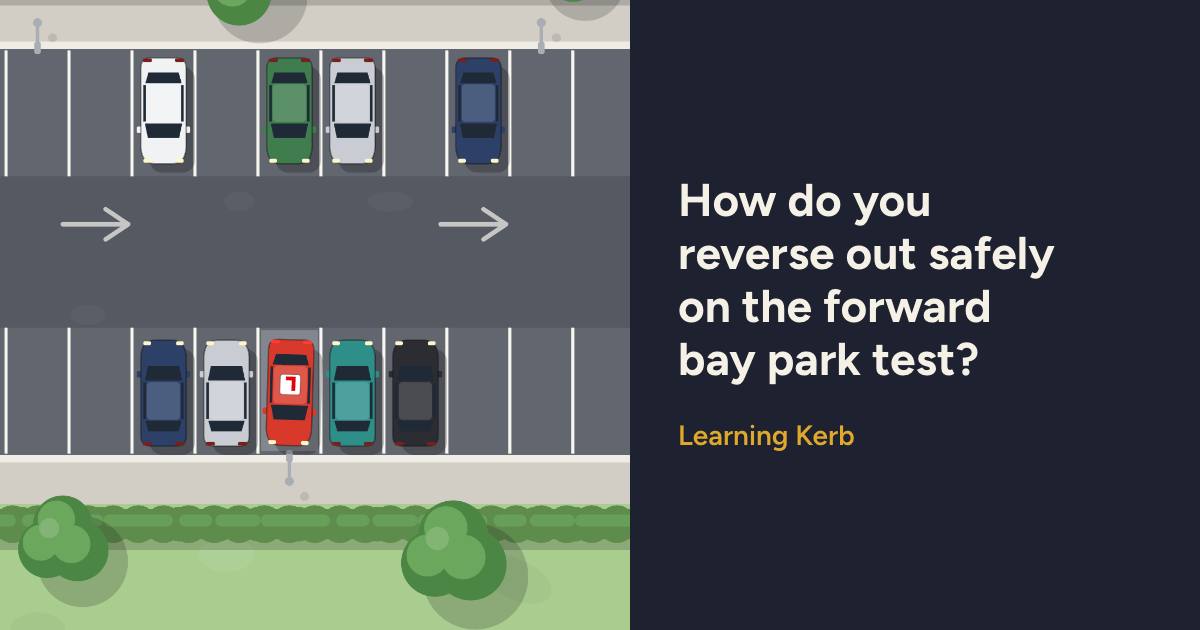
Going in: what GOV.UK expects
Parking in a bay is one of three reversing exercises on the test. GOV.UK says it can be either driving in and reversing out, or reversing in and driving out, and that the examiner will tell you which you have to do. You are marked on control and on your observation of your surroundings, and you should proceed only when it is safe.
You have to get it straight on the way in too. The common faults include not being positioned within the lines and not attempting to correct it, and steering too close to the vehicle in the next bay. If you are not within the lines, that wording suggests trying to put it right is better than leaving it.
Coming out: look before you move
Reversing out means backing into an aisle that drivers and people on foot are using, and they may not have seen you. Not making effective all round observations when reversing out is a common fault too. Before you move, check:
- all your mirrors
- the blind spots, over both shoulders
- behind you, through the rear window
If a car comes along the aisle
Stay in the bay and let it pass. Your reversing lights do not give you priority, and you cannot be sure the driver has noticed them. Creeping halfway out so they can see you leaves your car sticking into the aisle and makes the other driver stop. Wait until the aisle is clear, then reverse out in one go. If someone appears while you are moving, stop and let them pass.
As you come back, keep checking all round and remember that the front of your car will swing out as you turn. Practise in different car parks with your instructor or supervising driver.
How we mark each mistake
Practice marks only: on a real test, the examiner decides. How faults work.
You reversed without looking behind Dangerous fault
A car was coming along the aisle behind you. Look carefully all round before you start reversing, then reverse slowly, looking mainly through the rear window and checking all round.
You reversed into the car’s path Dangerous fault
The car in the aisle was too close for you to reverse out in front of it. Wait until the aisle behind you is clear; do not rely on other drivers noticing your lights.
Your observation was not all round Serious fault
Reversing out of a bay needs checks on both sides as well as behind. Use all your mirrors and look over both shoulders before you move.
You blocked the aisle Serious fault
Reversing halfway out left your car sticking into the aisle, and the other driver had to stop for you. Wait in the bay until the aisle is clear, then reverse out in one go.
What the Highway Code says
- Rule 202:
looking mainly through the rear window
MUST and MUST NOT are the law. Should is advice, which can still be used in evidence in court.
Where this fits on the test
DVSA driving skills: Reversing, Parking.