What are the common faults on the reverse bay park test?
The common faults are not looking all round, not finishing within the marked bay and having to reposition a lot. So stop just past the bay, use all your mirrors, look over both shoulders and through the rear window, and wait until anyone nearby is well clear. Then reverse slowly, looking mainly through the rear window, and finish straight and central in the space before you drive out.
You know the rule. Can you spot it on the road?
Try it in a free scene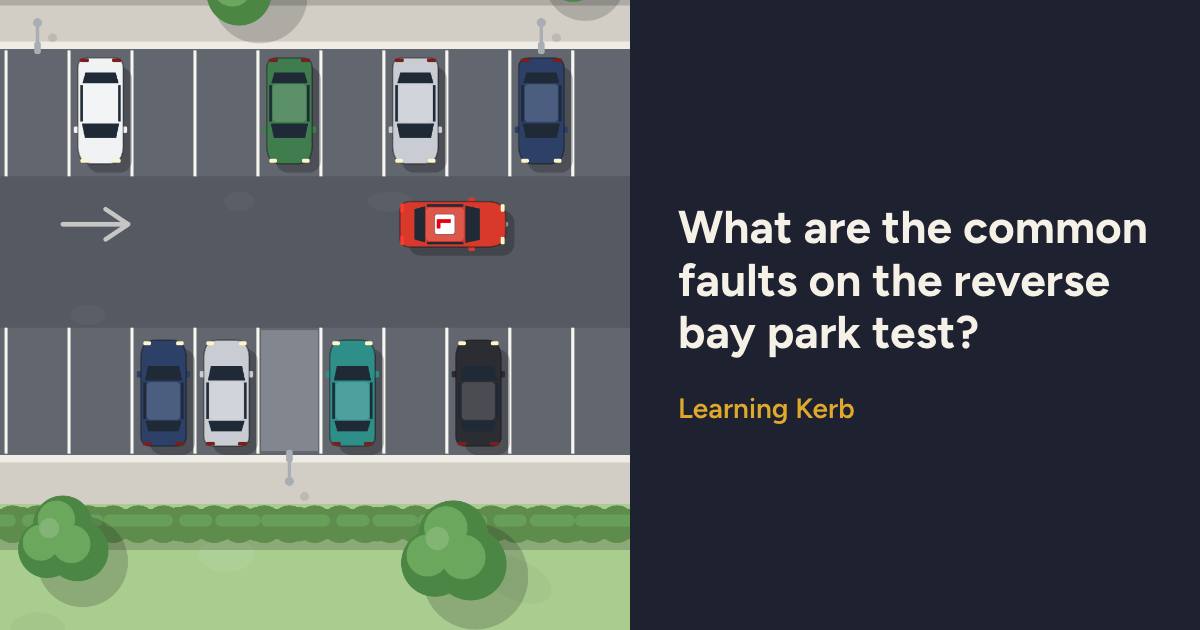
The common faults, and why looking comes first
It is tempting to stare at the lines, but GOV.UK says you are marked on observation as well as control. Not taking effective observations all round is one of the common faults, along with not finishing within the marked bay and having to reposition the car a lot.
Car parks have people on foot among the cars. Rule 202 asks you to check for pedestrians, particularly children, as well as cyclists, other road users and obstructions. That means looking on both sides as well as behind, before you start and all the way in.
Pedestrians, reversing lights and cameras
If someone walks towards your bay, stop and wait until they are well clear. They may not have seen you, and your reversing lights do not give you priority. Reversing slowly is not the answer either, because it still relies on them noticing you.
Use a reversing camera as an aid and nothing more. A camera shows only part of what is behind you, and it cannot replace looking round with your own eyes. Keep your mirrors, your shoulder checks and the rear window as your main way of seeing, and glance at the screen to help.
How to practise it
Once you are in the space, check where you have finished. You should be straight and central in the bay before you drive out. To improve your reverse parking, try:
- reversing into different size spaces
- making adjustments once you are in the space
- practising with your instructor or supervising driver
How we mark each mistake
Practice marks only: on a real test, the examiner decides. How faults work.
You reversed towards a pedestrian Dangerous fault
You started reversing without looking behind, and someone was walking into the space. Look carefully before you start reversing, including through the rear window.
You reversed towards a pedestrian Dangerous fault
The pedestrian was heading for the space you were reversing into. Wait until people are well clear; do not rely on them noticing your lights.
Your observation was not all round Serious fault
Reversing needs checks on both sides as well as behind. Use all your mirrors, look over both shoulders, and keep checking as you move.
You relied on the camera Serious fault
A reversing camera shows only part of what is behind you. Use it as an aid, and keep looking all round with your own eyes.
What the Highway Code says
- Rule 202:
check there are no pedestrians (particularly children), cyclists, other road users or obstructions in the road behind you
MUST and MUST NOT are the law. Should is advice, which can still be used in evidence in court.
Where this fits on the test
DVSA driving skills: Reversing, Parking.