Do you have to stop at a stop sign if the road is clear?
Yes. You MUST stop behind the line at a junction with a Stop sign and a solid white line, however empty the road looks. Slowing right down and rolling out is not stopping. Once you have stopped, look both ways and wait for a safe gap before you move off.
You know the rule. Can you spot it on the road?
Try it in a free scene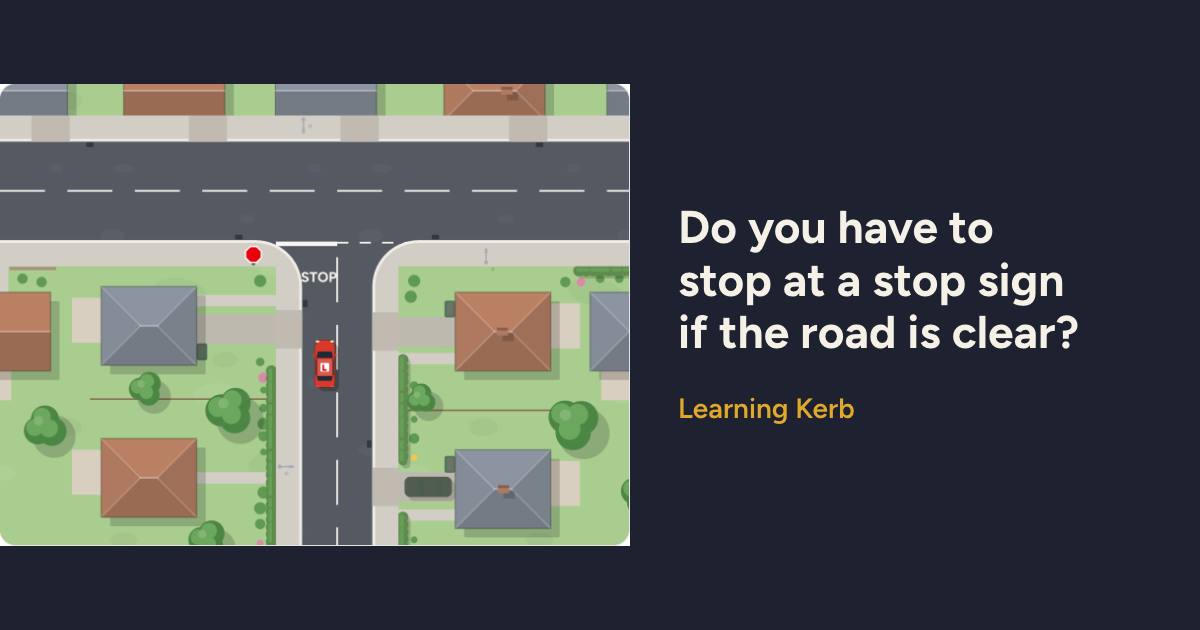
Why a clear road changes nothing
A Stop sign and a solid white line mean the same thing every time. “It looked clear” is a judgement made while the car is still moving, and stopping is what gives you time to look properly.
That matters most for whatever you would not spot at a glance. Rule 170 warns that cyclists and motorcyclists are not always easy to see, so a road that looks quiet from the approach may not be. Not stopping at a compulsory stop sign is one of the things DVSA names under responding to signs and signals.
Stop first, then improve your view
If the line is too far back to see much, stop behind it all the same, without pulling up just beyond it. If you then need a better view, edge forward slowly.
Deciding when to go
Stopping gets you to the line. The decision to go comes next:
- Look all around before you emerge, both ways, and then again.
- If a cyclist is coming, wait until they are clear of the junction. Going as they pass is too soon.
- Do not join the road until there is a gap large enough to do it safely.
- When the road is clear both ways and nobody is crossing or waiting to cross, go. Staying put at a clear junction only delays anyone behind you.
How we mark each mistake
Practice marks only: on a real test, the examiner decides. How faults work.
You pulled out in front of the cyclist Dangerous fault
You stopped, but then pulled out with the cyclist too close. After stopping, wait for a safe gap before you move off, and watch out for cyclists, as they are not always easy to see.
You rolled out without stopping Serious fault
A cyclist was coming from the right and had to brake for you. You MUST stop behind the line at a junction with a Stop sign and a solid white line, even when the road looks clear: stopping gives you time to look properly.
You went with the cyclist still close Serious fault
You got out behind the cyclist, but only just: you started to go before they had passed. Wait until they are clear of the junction before you pull out.
You stopped past the line Serious fault
You MUST stop behind the solid white line at a Stop junction. Stop at the line first; if you then need a better view, edge forward slowly.
You waited too long Driving fault
The road was clear both ways for several seconds. Waiting at the junction when it is safe to go holds up anyone behind you.
What the Highway Code says
- Rule 171:
You MUST stop behind the line at a junction with a ‘Stop’ sign and a solid white line across the road.
- Rule 170:
look all around before emerging. Do not cross or join a road until there is a gap large enough for you to do so safely.
MUST and MUST NOT are the law. Should is advice, which can still be used in evidence in court.
Where this fits on the test
Top 10 fail reasons: not responding correctly to traffic signs, not responding correctly to road markings. DVSA driving skills: Junctions.