What do you do if you are in the wrong lane on your driving test?
Stay in your lane and follow its arrows unless there is time and space to change lanes safely. GOV.UK says the examiner will not give you a fault for taking a wrong turning, and DVSA adds “if it’s done safely”. That covers the change of route. How you drive, including the lane you were in, can still be marked.
You know the rule. Can you spot it on the road?
Try it in a free scene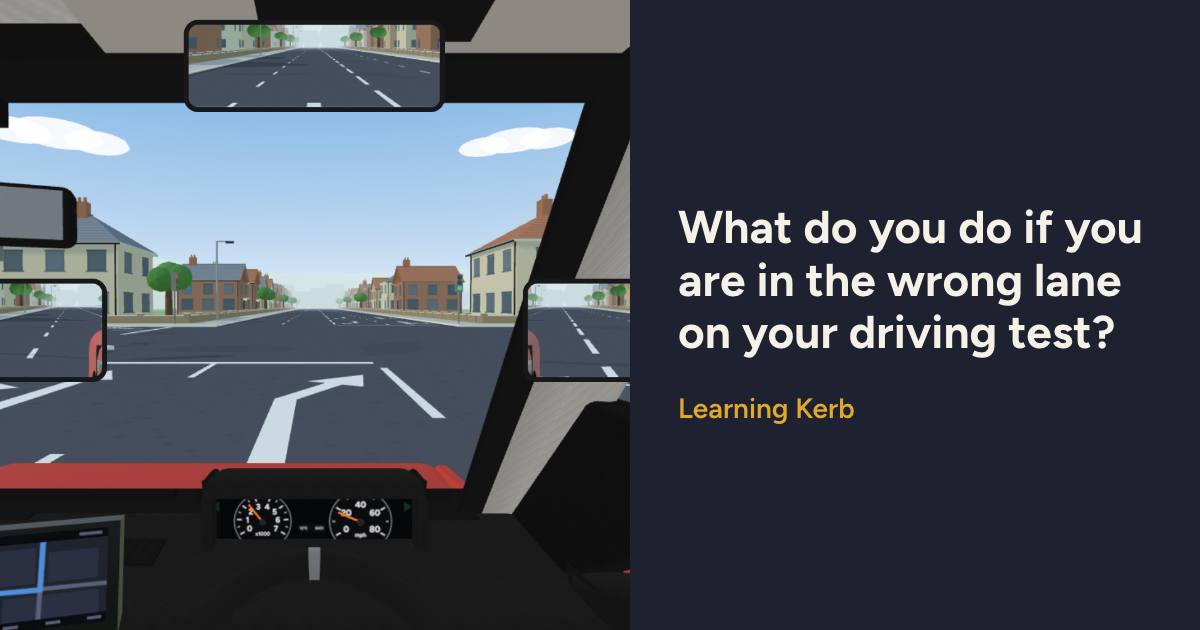
Why a wrong turn beats a late fix
With the lights just ahead, the urge is to put your lane right on the spot. Each way of doing that is worse than the mistake:
- Moving across with a car beside you means moving into it, however quickly you signal.
- Going straight ahead from a right-turn lane leaves other drivers unable to tell where you are going.
- Stopping in your lane to wait for a gap is not the answer either.
When you can still change lanes
Spot it early and you may have time. Ask whether there is the time and space to change lanes safely before the junction. Use your mirrors first and, if necessary, take a quick sideways glance, so that you will not force anyone to change course or speed. When it is safe, signal, and when it is clear, move over.
If a car is alongside you, that gap does not exist, and a signal does not create one. In congested traffic, do not change lanes unnecessarily.
Reading the arrows in time
You should follow the signs and road markings and get into the lane as directed, so the real cure is seeing them sooner. Look for lane arrows and direction signs as you approach, while you still have road to work with. A wrong turn made safely is forgiven, and ignoring the markings is another matter: driving in an incorrect lane that was clearly marked is among DVSA’s common faults, so going ahead from a right-turn lane is the real mistake. After a wrong turn, the examiner will help you get back on the route.
How we mark each mistake
Practice marks only: on a real test, the examiner decides. How faults work.
You moved across into the car beside you Dangerous fault
There was a car in the left lane and you moved across into it. If you need to change lane, first use your mirrors and look round so you will not force anyone to change course or speed. Here there was no safe gap.
You went ahead from a right-turn lane Driving fault
Your lane was marked for turning right. You should follow the signs and road markings and get into the lane as directed, so other drivers can tell where you are going.
What the Highway Code says
- Rule 133:
first use your mirrors and if necessary take a quick sideways glance to make sure you will not force another road user to change course or speed
- Rule 134:
You should follow the signs and road markings and get into the lane as directed.
MUST and MUST NOT are the law. Should is advice, which can still be used in evidence in court.
Where this fits on the test
Top 10 fail reason: not responding correctly to road markings. DVSA driving skills: Junctions, Safe positioning.