Who has priority on a narrow road with parked cars?
If the parked cars are on your side of the road, you should give way to traffic coming towards you. The Code words this as “should”, so it is advice. Slow down and wait in your lane, well back from the parked cars, until the way is clear.
You know the rule. Can you spot it on the road?
Try it in a free scene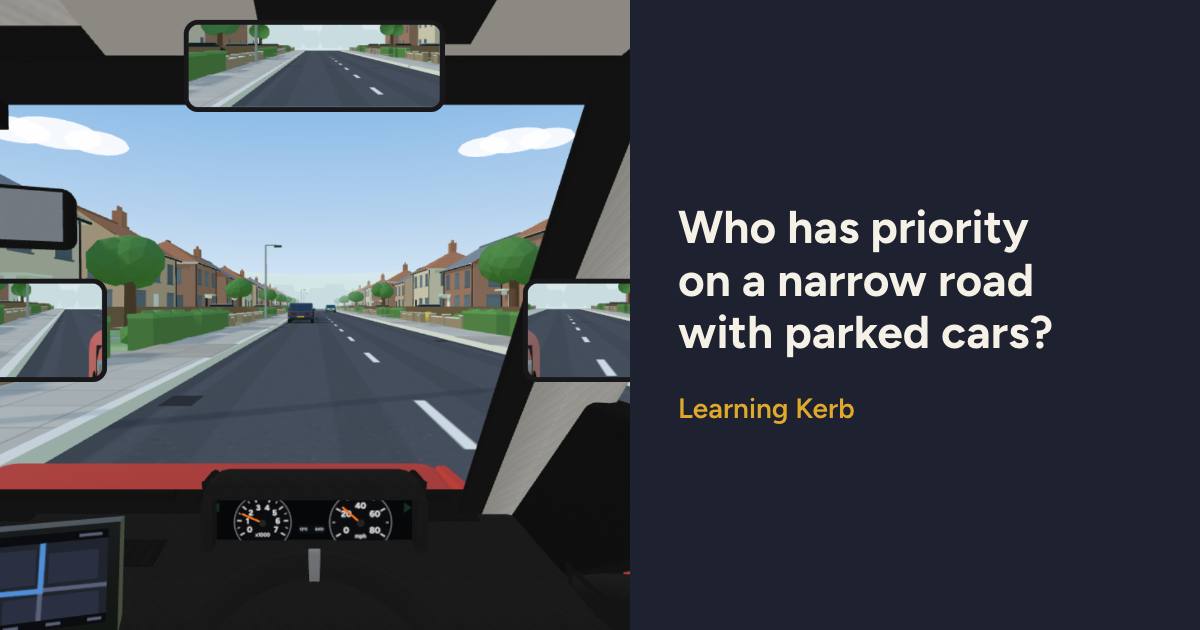
Which side are the parked cars on?
The Code’s advice works from one fact: which side of the road the obstruction is on. Driving a bigger car or being in a hurry do not come into it. The advice is about giving way before you pass the parked cars, so if you are already well along them when a car appears, keep going carefully. If cars are parked on both sides, this advice does not settle it: slow down, be ready to stop and use a gap to let the other car through.
When the parked cars are on the other side, the same advice applies to the other driver, so they should wait for you. Do not count on it, though. They may still come through, so keep your speed down and be ready to stop.
Why you should wait well back
Pulling out beside the parked cars and stopping there is the mistake that looks like giving way. You have stopped, but you are now in the only space the other car has, and it has to stop too. Stay in your own lane, back from the first parked car. That leaves the gap open for them and gives you room to steer out when they have gone.
Reading it early
Reacting late when meeting an approaching vehicle is one of the common faults DVSA lists. Looking well ahead lets you plan it without any drama:
- Spot the parked cars, and notice which side they are on.
- Look past them for anything coming towards you.
- Work out roughly where you would meet. If that is beside the parked cars, ease off now.
- If the other driver flashes their headlights, do not take it as an invitation. Use your own judgement and go carefully.
How we mark each mistake
Practice marks only: on a real test, the examiner decides. How faults work.
You did not give way to the oncoming car Dangerous fault
The parked cars were on your side of the road, so you should have given way. The oncoming car braked hard but could not avoid you. Give way to oncoming vehicles before passing parked vehicles on your side.
You blocked the road Serious fault
Pulling out beside the parked cars left no room for the oncoming car, so it had to stop. Wait in your own lane, well back from the parked cars, until the way is clear.
What the Highway Code says
- Rule 163:
give way to oncoming vehicles before passing parked vehicles or other obstructions on your side of the road
MUST and MUST NOT are the law. Should is advice, which can still be used in evidence in court.
Where this fits on the test
Top 10 fail reason: poor positioning on the road during normal driving. DVSA driving skills: Other traffic, Safe positioning.