How do you take a sharp bend on a country road?
Slow down on the approach to the bend, keep to the left, and choose a speed that lets you stop within the distance you can see to be clear. Bends can be sharper than they appear, and something slow may be just out of sight.
You know the rule. Can you spot it on the road?
Try it in a free scene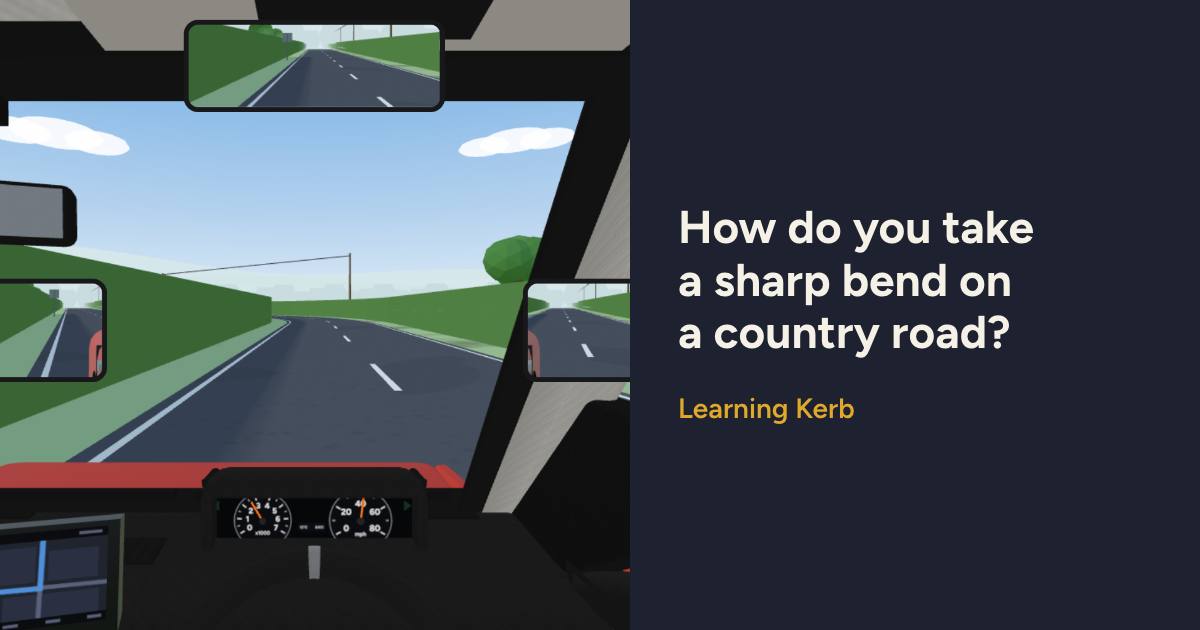
Let what you can see set your speed
The speed limit tells you nothing about a bend you cannot see round. The Code says not to treat speed limits as a target, and DVSA gives this very case as an example of not driving at a safe speed: approaching a sharp bend too fast on a country road where the national speed limit applies, and losing control.
A better guide is the stretch of clear road in front of you. High hedges can cut it right down. Ask how far you can see, and whether you could stop in that distance. If you are not sure, slow down more, and do it before you reach the bend.
What may be waiting round it
Be prepared for the road being blocked beyond a blind bend. On country roads the Code also tells you to be prepared for:
- pedestrians and horse riders
- cyclists
- slow-moving farm vehicles
- mud on the road surface
Why moving out for a better view does not work
On a left-hand bend, drifting towards the centre line may show you more of the road, but it can put you in the path of anyone coming the other way, on a road where you cannot see them yet. Keep to the left and get your extra safety from less speed. On a right-hand bend, the Code says to keep well to the left, which improves your view and helps you avoid traffic approaching from the opposite direction.
How we mark each mistake
Practice marks only: on a real test, the examiner decides. How faults work.
Too fast for the bend Dangerous fault
A slow tractor was round the bend, and at your speed you closed on it too quickly to stop. Reduce your speed on the approach to bends, which can be sharper than they appear, and make sure you can stop within the distance you can see to be clear.
You moved into the path of oncoming traffic Dangerous fault
Moving out to see round a left-hand bend put you in the path of a car coming the other way. Keep to the left and slow down instead, so you can stop within the distance you can see.
What the Highway Code says
Where this fits on the test
Top 10 fail reasons: not driving at a safe and reasonable speed, poor positioning on the road during normal driving. DVSA driving skills: Country roads, Use of speed.